Situations and problems

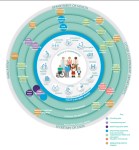
I have been thinking and reading about systems recently, reviving an old preoccupation, and came across Denis Loveridge‘s book Foresight: The Art and Science of Anticipating the Future.  A lot of what Loveridge covers in the book is relevant to questions that arise in relation to deliberative dialogue: the nature of expertise, the policy-making process, scenario planning, the roles of reason and intuition, the value and limitations of models and more.  What I found particularly interesting is his insistence on referring to situations and not to problems.  The latter, he says, invite the promise of solutions. They’re essentially logical in structure, reductive and can be viewed in their totality.  The problem solver is outside the problem they are trying to solve (or at least, thinks they are).    Problems are computational: I used to solve formal logic problems at university and I’ve been solving problems recently, trying to style this website.

Situations, Loveridge says, are “never ‘done with’…but simply change their context and content after every intervention” (p19).  You’re always in a situation and its complexities are irreducible to a set of discrete and solvable problems that you can map from the outside. The boundaries of a situation are uncertain,  dynamic and open to debate: determining them is a practical task, and involves art and pragmatism as well as science, calling for negotiation, compromise and dialogue.

Loveridge puts the idea of the situation to play in his discussion of the interaction between Science and Society and the interactions between sciences and societies, referring to Weinberg’s notion of trans-science and issues “that hang on the answers to questions that can be asked of science and yet cannot be answered by science” (p20).

This is where dialogue comes in, such as that supported in the UK, by Sciencewise. Public dialogues have been held on topics ranging from the use of drones to the principles which should guide publicly funded research bodies when working with industry to generic design assessment (GDA) for new nuclear.  I’ve run a fair few myself, on topics ranging from drugs, to stratified medicine, mitochondrial DNA, bovine TB, global food security and nanotechnologies.
wicked

The topics addressed in public dialogue are often classed as “wicked problems”, such as those discussed by  Josephine Suherman-Bailey, in a blog for Involve. Josephine describes the value of public dialogue and open policy-making as elements in tackling these wicked problems. She talks of them in much the same way that Loveridge talks of situations.  Situations cannot be described from a single policy perspective, and nor indeed by policy-makers and “experts” alone.  Wicked problems – situations – are non-mechanistic systems, as Involve also describe, in Room for a View, making forecasting and prediction difficult if not impossible.

In many dialogues, we tend to bring in “the public” as a discrete sample, expose them briefly to “experts”, including policy makers and then leave. The people we talk to in their guise as “the public” are not part of the process by which we determine the boundaries of a dialogue nor part of deciding how what we’ve learned from them translates into policy, how it is weighed against other inputs or what underlying values might be betrayed if input from the public is tweaked to make it more policy-friendly or more in line with views from other interested parties.
Publics participating in dialogue are given a pre-determined perspective on the situations on which they are asked to deliberate.  But what is the pre-determined perspective on the situation we are in now?


What must we do next?

In a Civil Service World article posted on 22 June, Paul Baines argues that the complexity of the arguments on both the remain and the leave side is such that decisions about which way to vote will be led by emotion, rather than being informed by reason.  In theory we are more likely to be risk averse rather than opportunity grabbing – that is, vote remain, to avoid the risks of leaving, rather than vote leave, to embrace the unknown opportunities this might bring. However, Baines argues that the inability of the remain camp to present a clear message and their resort to fear-mongering could mean that the outcome doesn’t align with the theory. And so it was.

The leave camp focus on immigration and the NHS was a ‘hearts’ rather than ‘minds’ approach.  This is why they are struggling now to articulate a plan and rowing back rapidly on the slogans: they were never real promises, thought through on the basis of a careful assessment of the likely fall-out of a leave vote. They were just, as Iain Duncan Smith put it, ‘a series of possibilities’, lacking any substance.

We are in a terrible situation.  The Scottish political leadership – Labour as well as SNP – are looking at opportunities to remain in the EU and talking about alliances with Gibraltar.  So we are looking at the possible break-up of the UK. EU leaders are fearful of the domino effect, and the possibility that other nations will follow the UK out. Standard & Poor, Moody’s and Fitch have dropped the UK’s credit rating.  The pound has crashed and economists are pointing to “at least six months of political and economic paralysis, with a recession quickly becoming the markets’ baseline scenario.

Baines says, quite rightly:

“The EU referendum experience holds lessons for engaging the public in complex political issues and communications campaigns more generally.”

We need to act on these lessons very fast. We know how good engagement works – and, in particular, how good engagement can reduce the emotional heat in an argument and present complex situations in accessible ways, without diminishing their complexity.  We know how to help people think through the implications of their immediate responses and support them to deliberate on how decisions might impact on them, and also on others in different contexts, with different resources and capabilities.  We need to use this knowledge now.

My fear is that if we don’t take action fast to limit the fallout – which will be felt particularly hard by those with no financial cushion – then the political vacuum will be filled by the loud voices of hate.  We have already heard of racist attacks increasing since the vote.  We need to bring people who voted leave and those who voted remain together to discuss what kind of country we want to be.  This is in part about the nature of our future relationship with the EU but it has to be about more than this:  the situation is at present too uncertain, we haven’t invoked Article 50 and until this happens the fight to overturn the outcome of the vote is likely to continue.

We need to engage people on the topics that drove the antagonism expressed through the Leave vote and on the fears felt by the Remain camp.  In particular, the poison needs to be extracted from the debate about immigration and how it affects our country. This means involving people who experience its impacts: this means involving immigrants as well as those who fear immigration. These impacts are real, though we don’t really talk about them, because it’s difficult and uncomfortable.

There is no trust in the political process and many people will have used their votes to vent their anger on those inside the gilded spheres of politics and business. People have suffered from years of austerity with no one listening to them: many of them want someone to blame. So some – perhaps many – have blamed immigrants, ‘experts’ and ‘the establishment’.

We need to work across leave and remain camps, drawing together people who want to figure out where we are (which is anyone’s guess at the moment) and what our options are: this can be about whether we prefer a Norwegian or a Swiss model, or a Canadian model or some other model. But it needs to be more than this.  Whichever model we opt for, or if somehow the row-back works and we don’t leave, we have damaged ourselves as a country, and damaged our friends around the world.  We need to work out quickly how to mend ourselves, before the forces of division and hatred fill the vacuum.

Involve has started this process, looking at how we can re-frame the debate.  We all need to join in.